

There is no single best month for Vietnam and Cambodia, because the regions follow different weather patterns. As a broad rule, November to April is the most comfortable period for a journey that covers the north, the south and Angkor, while central Vietnam, home to Hoi An and Hue, is at its loveliest from about February to August. The art lies in sequencing your route so each region meets you in its best season.
Three Climates in One Country
Vietnam stretches more than a thousand miles from north to south, and its long, narrow shape gives it three distinct climates.
- The North (Hanoi, Ha Long Bay, Sapa, Ninh Binh): a true seasonal climate. Autumn, from October to early December, is clear and mild. Winter, from December to February, is cool and often grey, and the mountains can be cold at night. Spring is gentle, and summer, from May to September, is hot, humid and wet.
- The Center (Hue, Hoi An, Da Nang): follows its own rhythm. The dry, sunny months run roughly from February to August. From about September to December, heavy rain is common and the coast can be affected by tropical storms, with flooding most likely in October and November.
- The South (Ho Chi Minh City, the Mekong Delta): warm all year. The dry season from December to April brings sunny days, while the wet season from May to November usually means intense afternoon showers that pass quickly.
Ha Long Bay and the North
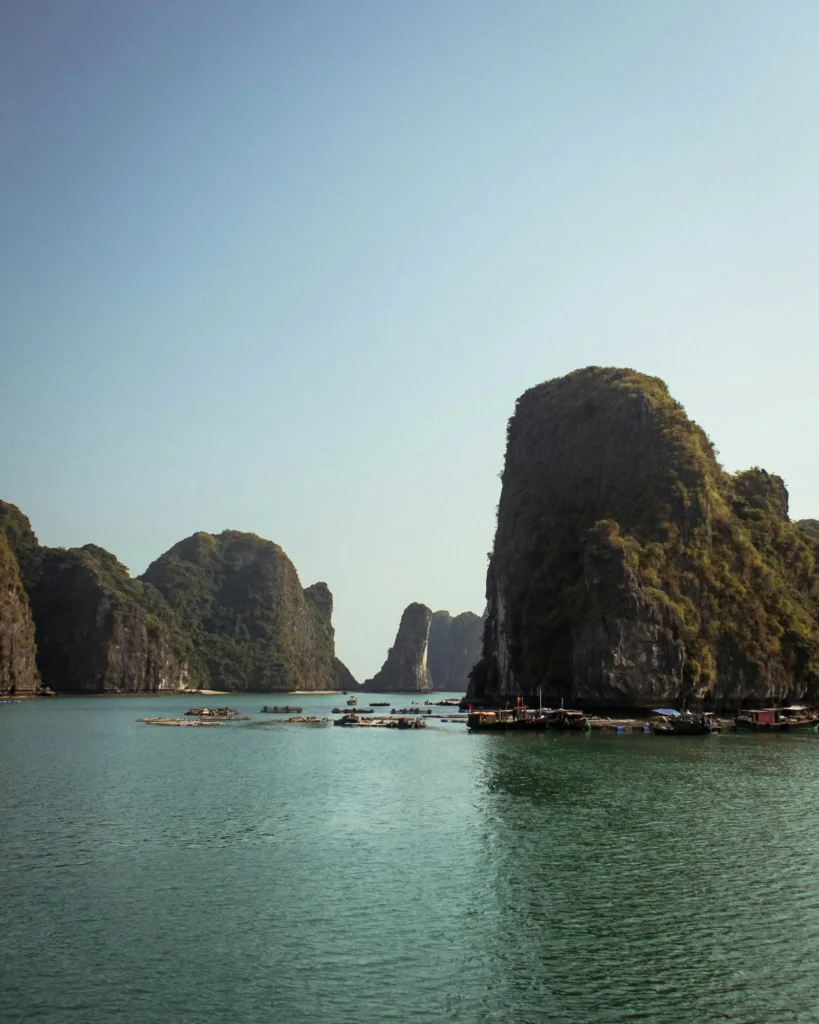
Ha Long Bay and its quieter neighbor, Lan Ha Bay, are at their best from October to April, when seas are generally calm. October and November bring the clearest skies. From roughly February to April, soft mist often drapes the limestone karsts, which some travelers find wonderfully atmospheric and photographers occasionally find frustrating. Summer cruises remain beautiful, but storms can occasionally lead to sailing cancellations.
In the northern highlands around Sapa, September and October bring golden rice terraces ready for harvest, while spring brings fresh green planting.
Hoi An, Hue and the Central Coast
For beach time on the central coast and walks through Hoi An’s lantern-lit old town, February to August is the dependable window. Spring months are warm but not yet intense; June to August is hot and ideal for the beaches of Da Nang. We generally route travelers around the central region in the late autumn rains, or plan it with flexibility, because floods in Hoi An’s old town are part of local life in October and November.
Saigon and the Mekong Delta
The south is welcoming year-round. The dry season from December to April is the classic time, with easy days on the Mekong’s rivers and canals and comfortable evenings in Ho Chi Minh City. During the wet season, mornings are often fine and the delta is at its most lush, with fruit orchards heavy in early summer. The water level in the Mekong rises through the later wet months, which brings its own beauty.
Angkor and Cambodia
Cambodia has a simpler pattern of a dry season and a wet season.
- November to February: the finest time to visit Angkor. Mornings are fresh, skies clear, and sunrise over Angkor Wat is at its most magical. This is also the busiest period.
- March to May: increasingly hot. Temple visits are best at dawn and late afternoon, with a long pause in the middle of the day.
- June to October: the green season. Afternoon rains cool the air, the moats fill, jungle temples such as Ta Prohm glow with moss, and visitor numbers fall.
The Tonle Sap lake swells dramatically in the wet season, and visits to its floating villages are best timed with local advice, since water levels shape what is possible.
Tết in 2027: What to Know
Tết, the Lunar New Year, is Vietnam’s most important holiday. In 2027 it falls on Saturday, February 6, welcoming the Year of the Goat. The weeks before are joyful, with flower markets, decorated streets and a palpable sense of anticipation. During the holiday itself, many families travel home, some shops and restaurants close for several days, and domestic flights and trains fill quickly.
Experiencing Tết can be deeply rewarding, especially in the days leading up to it, but it calls for planning. Hotels and transport around the holiday should be secured early, and the itinerary built with the closures in mind.
Sequencing a North-to-South Journey
A classic two- to three-week journey from Hanoi to Saigon with Angkor can be timed well in almost any season by choosing the direction of travel. In late autumn, for example, start in the clear north, travel lightly through the center and finish in the drying south and Cambodia. In spring, the whole country tends to align beautifully. AHL’s founder began his career as an international tour guide in Vietnam in 1998, and that local knowledge still shapes how we pace each route.
Plan Vietnam and Cambodia with AHL
We arrange private journeys through Vietnam and Cambodia with hand-picked hotels, local guides and an itinerary sequenced around the seasons. Tell us when you would like to travel, and we will prepare a tailored proposal at no cost.
Frequently Asked Questions
What is the best time to visit Vietnam and Cambodia together?
November to April is generally the most comfortable period for a combined trip, with dry weather in the south and at Angkor and pleasant conditions in the north. February to April often suits the whole route, including central Vietnam.
When is the rainy season in Hoi An?
Central Vietnam’s rainy season runs roughly from September to December, with flooding and tropical storms most likely in October and November. February to August is the most reliable time to visit.
When is Tết in 2027?
Tết, the Vietnamese Lunar New Year, falls on Saturday, February 6, 2027. Expect some closures and busy transport around the holiday, so book early.
What is the best month to visit Ha Long Bay?
October and November usually offer the clearest skies and calm seas. The season from October to April is generally favorable, though mist is common from about February to April.
Is it worth visiting Angkor in the rainy season?
Yes. From June to October the temples are greener, the moats are full and crowds are lighter. Rain usually comes in afternoon bursts, so mornings remain good for exploring.
