

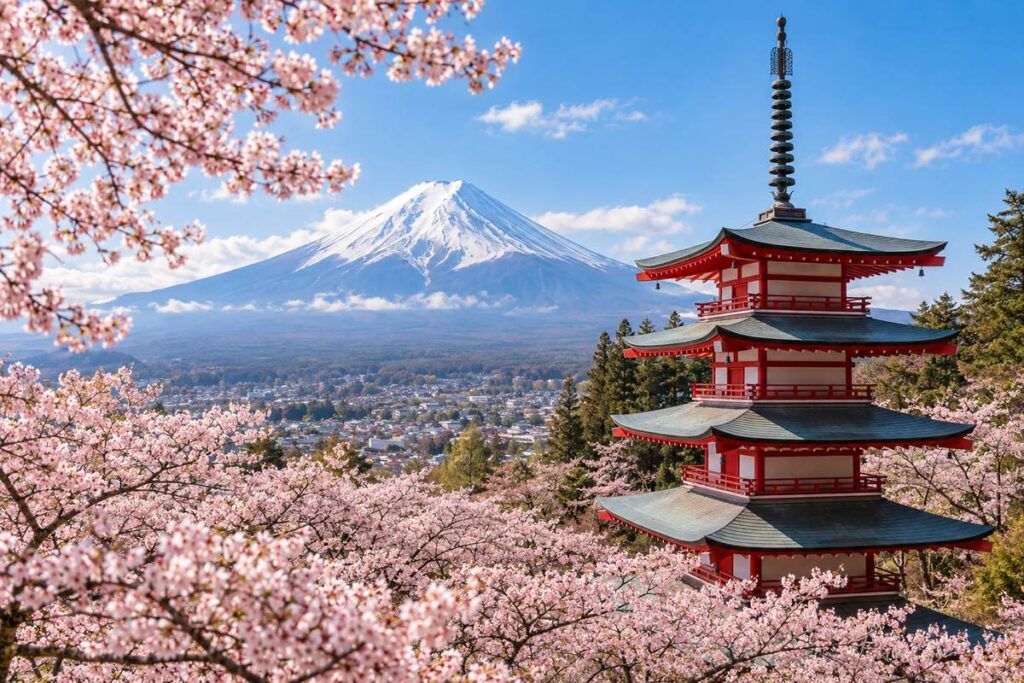
In a typical year, Japan’s cherry blossoms reach full bloom in Tokyo, Kyoto and Osaka between the last days of March and the first week of April, then move north to Tohoku in mid- to late April and Hokkaido around the start of May. For spring 2027, the wisest approach is to plan around those historical windows now, leave a few days of flexibility, and refine the details once the official forecasts appear early in the new year.
How the Bloom Moves Across Japan
The Japanese call it the sakura zensen, the cherry blossom front. It travels from the warm south in March to the cool north in May, rising up into the mountains as it goes. The most widely watched variety, Somei Yoshino, flowers for only about a week at its peak, which is why timing matters so much.
Two moments define the season in each city. First bloom is declared when a handful of flowers open on a designated sample tree. Full bloom usually follows about a week later, when most of the buds have opened. The days around full bloom, and the few days after as petals begin to drift, are the ones most travelers hope to catch.
Typical Bloom Windows by Region
These are approximate averages from recent decades. Any given year can run several days earlier or later depending on winter and early-spring temperatures, and recent springs have often leaned early.
| Region | Typical full bloom |
|---|---|
| Tokyo | Late March to early April |
| Kyoto | Late March to early April |
| Osaka | Late March to early April |
| Hakone | Early to mid-April, varying with altitude |
| Mount Fuji Five Lakes | Mid- to late April |
| Tohoku (Hirosaki, Kakunodate) | Mid- to late April |
| Hokkaido (Hakodate, Sapporo) | Late April to early May |
The pattern creates a useful opportunity. If the bloom has passed in Tokyo or Kyoto when you arrive, heading to higher ground or farther north often finds it again.
How the Forecasts Work
Japan takes its blossom forecasts seriously. Private weather services, including the Japan Meteorological Corporation, Weathernews and tenki.jp, typically publish their first forecasts in the early weeks of the year and update them regularly as spring approaches. The Japan Meteorological Agency then declares the actual first and full bloom dates by observing official sample trees, such as the one at Yasukuni Shrine in Tokyo.
The forecasts become more precise as March draws near. That is why we suggest choosing your dates around the historical averages, booking the key hotels well in advance, and keeping some flexibility in the order of your itinerary so that the Tokyo and Kyoto portions can be adjusted once forecasts firm up.
Crowds and How to Find Calm
Cherry blossom season is Japan’s busiest spring period, both for international visitors and for Japanese families who gather for hanami, picnicking beneath the trees. Hotels in Kyoto and Tokyo during the peak bloom weeks are among the most sought-after rooms in the country, and the finest ryokan in Hakone and Kyoto can be committed many months ahead. Golden Week, from roughly late April to early May, brings another surge of domestic travel.
A few simple choices make a great difference:
- Go early: famous spots such as the Philosopher’s Path in Kyoto or Chidorigafuchi in Tokyo are serene at dawn.
- Look beyond the icons: temple gardens, riverbanks and smaller neighborhood parks often bloom just as beautifully with a fraction of the visitors.
- Use a private guide: a knowledgeable guide knows which gardens are peaking that week and how to move between them gracefully.
- Stay in a ryokan: a night or two in Hakone or the countryside brings quiet evenings, private baths and seasonal kaiseki cuisine.
A Classic Spring Route
A first spring journey often begins in Tokyo, continues to Hakone for views of Mount Fuji and a ryokan stay, then travels by Shinkansen to Kyoto and Osaka. Ten to fourteen days allows an unhurried pace. Because Hakone and the Fuji lakes bloom a little later than the cities, the route naturally extends the season. Travelers with more time can continue north to Tohoku’s castle parks, where Hirosaki’s moat lined with cherry trees is one of Japan’s loveliest sights.
The Autumn Alternative
For many travelers, autumn is every bit as rewarding as spring, and timing is a little more forgiving. Maples and ginkgo turn crimson and gold over several weeks rather than a single week.
- Hokkaido and high mountains: from late September into October.
- Nikko and the Japanese Alps: generally October.
- Tokyo, Kyoto and Osaka: typically mid-November to early December.
The weather is mild and dry, the light is golden, and the temple gardens of Kyoto are at their most poetic. If spring dates are difficult to secure, autumn is an outstanding choice.
Plan Your Japan Spring with AHL
We design private journeys through Japan with hand-picked hotels and ryokan, English-speaking guides and itineraries built around the bloom. Share your preferred dates, and we will prepare a tailored proposal at no cost.
Frequently Asked Questions
When will the cherry blossoms bloom in Tokyo and Kyoto in 2027?
Exact dates are not known until forecasts are published early in 2027. Historically, full bloom in Tokyo and Kyoto falls between late March and early April, and recent springs have often been slightly early.
How long do cherry blossoms last?
In any one place, Somei Yoshino blossoms are at their best for about a week around full bloom. Because the bloom travels north and up into the mountains, the overall season in Japan runs from March into May.
What if I miss the cherry blossoms in Tokyo or Kyoto?
Head to higher elevations such as Hakone and the Fuji Five Lakes, or north to Tohoku and Hokkaido, where the bloom arrives later in April and early May.
How early should I book a cherry blossom trip to Japan?
Ideally six to nine months ahead or more. The best hotels and ryokan in Kyoto, Tokyo and Hakone are in very high demand during bloom weeks.
Is autumn a good alternative to spring in Japan?
Yes. Autumn color peaks over several weeks, from October in Hokkaido and the mountains to mid-November and early December in Tokyo and Kyoto, with mild, dry weather.
